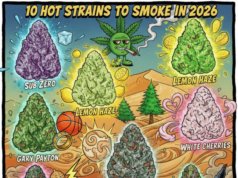

There is a particular kind of poster you still see in older smoke shops. It usually hangs somewhere behind the counter, half-hidden by newer displays. The corners have curled inward. The purple has faded, but the orange mushrooms and acid-green lettering still glow when the blacklight comes on.
Nobody remembers the artist’s name. The shop owner may not even remember when the poster arrived. Yet taking it down would feel wrong. It has become part of the room.
I have a soft spot for those posters because they never tried to look respectable. The words were difficult to read, the colors argued with one another, and every available inch contained another eye, flower, planet or suspiciously cheerful frog. They were advertisements, decorations and a private joke shared with anyone who understood the visual language.
Now type “vintage psychedelic cannabis poster” into an AI image generator and something similar appears before you have time to make coffee.
The first result will probably be impressive. The second may be better. By the tenth, though, a strange sameness begins to show. The colors are right, the cosmic smoke is present and the imaginary lettering looks almost readable. What is missing is harder to name.
Perhaps it is the feeling that somebody had to make a decision and live with it.
Before the prompt, there was a printing problem
The great psychedelic posters of the 1960s did not emerge because artists had unlimited tools. Quite the opposite. Printing imposed boundaries, and good artists turned those boundaries into style.
A limited palette forced colors to work harder. Text had to fit around illustrations. Registration errors left slight halos where one layer of ink did not line up perfectly with the next. Instead of hiding every imperfection, the finished poster often seemed to enjoy them.
The visual influences came from everywhere: Art Nouveau lettering, surrealism, comic strips, religious imagery, science fiction and the underground press. Cannabis was part of the atmosphere, sometimes openly and sometimes through symbols understood mainly by the intended audience.
As the style moved into head shops, record stores and bedrooms, it became less polished and more personal. Some pieces were sophisticated works of illustration. Others looked as though a friend of the band had drawn them on a kitchen table the night before printing.
That was not always a weakness. You could often feel the local scene in the artwork.
Cannabis imagery today has a different job. In a legal market, a package must sit on a dispensary shelf, carry required information and distinguish itself from dozens of competitors. It has to look appealing without appearing designed for children. It may need to suggest relaxation, energy, flavor or premium quality before the customer reads a single word.
That is why modern cannabis packaging can resemble skincare, craft beer, hot sauce or a bottle found in an old pharmacy. The familiar green leaf has not disappeared, but using it as the entire identity now feels like naming a coffee shop “Coffee.”
The industry grew up, hired designers and discovered brand guidelines.
Something was gained. Product information is easier to find, visual systems are more consistent, and good packaging no longer has to shout. Something was also lost. A shelf full of tasteful beige boxes can make a person miss the cheerful frog.
Then the machine joined the art department
Generative AI arrived at exactly the right moment for small brands and independent creators. Visual content is expected everywhere now: on packages, menus, websites, event flyers, merchandise and five different social platforms. Few small companies can afford to commission original art for every one of those uses.
An image generator offers an irresistible deal. Describe an idea, wait a few seconds and receive several possible directions.
For brainstorming, that can be genuinely useful. A designer can compare a hand-printed look with a glossy science-fiction approach before spending hours developing either one. A musician can rough out a cover for a demo. A shop can test whether a promotional idea looks funny or merely confusing.
The mistake is assuming that the first attractive image is finished.
AI is excellent at producing an overall impression. It can deliver “psychedelic,” “luxury” or “retro-futurist” at a glance. Look closer and the confidence begins to wobble. A hand has six fingers. A leaf grows from nowhere. The same jar changes shape between two images. Lettering resembles English until you attempt to read it.
For a mood board, those errors are survivable. On an actual product label, they are embarrassing. If the system alters the shape, color or texture of a product, the image may also mislead customers.
This is where the human art director earns the fee that the “make art” button supposedly eliminates. Someone still has to notice that the generated glass rig could never stand upright, that the type disappears at thumbnail size or that an illustration leans on stereotypes the brand should not repeat.
Writing the prompt is only the beginning. The real creative work remains selection, correction and knowing when an interesting accident should stay.
I am also unconvinced by prompts that simply ask for “the style of” a living artist. It is lazy in the same way that walking into a tattoo shop and saying, “Copy this person’s work exactly” is lazy. Better to identify what actually attracts you: cramped linework, fluorescent contrast, uneven screen-print texture, dreamlike anatomy or a palette limited to rust and violet.
That gives the machine a direction without treating somebody else’s career as a filter.
Bodies, fantasy and the line that matters
The human body has always belonged to psychedelic art. Look back through old posters and album sleeves and you will find dancing silhouettes, cosmic couples, mythological figures and nudes dissolving into flowers or stars.
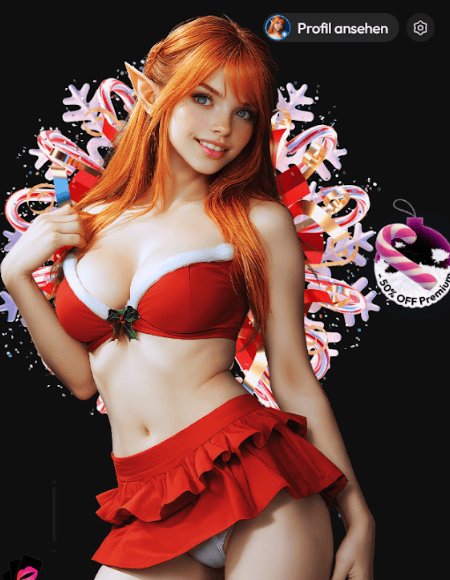
AI makes that kind of figure work accessible to people who cannot draw anatomy or arrange a photo shoot. Adult creators can use this AI artwork tool to experiment with fictional nude compositions, poses and visual styles in a private creative setting. Used responsibly, it is a positive example of how generative technology can lower the technical barrier between an idea and an image.
The important word is “fictional.”
Creating an imagined adult figure is one thing. Taking the face of an ex-partner, co-worker or stranger from social media and placing it in a nude image is something else entirely. The image may be synthetic, but the person’s identity is real, as is the humiliation or harassment that can follow.
A public photograph is not blanket permission. Neither is a past relationship. Consent has to cover the actual use.
This is not a fussy rule added to spoil an interesting technology. It is the condition that keeps private fantasy from becoming somebody else’s problem. Adult platforms need clear age restrictions, reporting systems and rules against non-consensual likenesses. Users should also check what happens to their prompts and uploads after the image is generated.
A friendly interface is still a data service.
The same basic honesty should apply when AI artwork is used commercially. If a generated image appears in a campaign, the brand should know whether the tool permits commercial use. If the picture could be mistaken for a real photograph, labeling it as synthetic is often the sensible choice.
People are generally more accepting of creative experiments when they do not feel tricked.
Why the battered poster still wins
AI art is not going away, and I do not think artists need to pretend it has nothing to offer. The most interesting work will probably come from people who are willing to move between tools.
Someone might sketch a composition in pencil, generate several lighting ideas, rebuild the best version in illustration software and then screen-print the final piece by hand. Another artist may use AI only for textures. A packaging designer may reject every generated picture but keep an unexpected color combination.
That is how creative tools usually enter culture: not by replacing everything that came before, but by becoming one more object on the desk.
There may even be a market advantage in showing more human work. When flawless-looking images can be generated by the hundred, a crooked line or visible brush mark begins to carry new value. It says that time passed here. Someone touched this.
Which brings us back to the old poster.
An AI system can produce a cleaner version in seconds. It can sharpen the mushrooms, brighten the colors and invent lettering that curls into the shape of a dragon. Technically, the new image may be superior.
But it has not spent twenty years absorbing smoke-shop light. Nobody remembers buying it with their first glass piece. No employee has argued that it should remain on the wall during three separate renovations.
The faded poster has a biography. The generated image has a file history.
That does not make one art and the other not-art. It simply explains why the older object can be difficult to replace.
Cannabis culture has never been visually pure. It has borrowed, remixed and exaggerated whatever it found interesting. Generative AI belongs in that messy tradition. It will produce plenty of disposable pictures, a few clever shortcuts and, eventually, work that could not have been made any other way.
The machine can supply psychedelic colors before the coffee is ready. Giving those colors a reason to stay on the wall still takes a person.